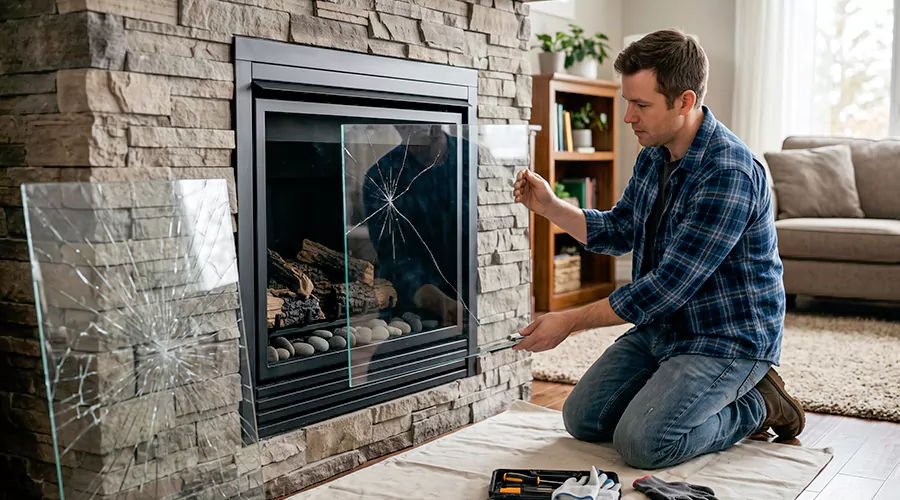
What Causes Gas Fireplace Glass to Crack?
Cracked gas fireplace glass is a safety issue, not a cosmetic one. Thermal stress and impact are common causes, and regular glass should never be used.




Based on 500+ Reviews

Proudly American
Owned & Operated

The glass on a gas fireplace is designed to withstand high temperatures, but it can still crack or break due to excessive heat, physical damage, improper installation, or sudden temperature changes. Because gas fireplace glass is a specialized heat-resistant component, cracks should not be ignored.
A damaged fireplace glass panel can affect the safe operation of the fireplace by allowing heat, combustion gases, or flames to escape improperly. Understanding the common causes of cracked gas fireplace glass can help homeowners prevent damage and know when replacement is needed.
Gas fireplace glass can crack because of:
One of the most common causes of cracked fireplace glass is thermal shock. Thermal shock occurs when the glass experiences a sudden change in temperature.
Examples include:
The sudden expansion and contraction can create stress within the glass and cause it to crack.
Gas fireplace glass is designed for high temperatures, but excessive heat can create stress.
Overheating may happen because of:
Excessive heat can weaken the glass over time and increase the chance of cracking.
Gas fireplace glass must be installed correctly to operate safely.
Problems may occur if the glass is:
Glass needs room for controlled expansion when heated. Improper installation can place stress on the panel and cause cracks.
Gas fireplace glass can crack if it is hit by an object.
Possible causes include:
Even a small chip or crack can weaken the glass and cause further damage when the fireplace heats up.
Gas fireplaces require specific heat-resistant glass designed for that model. Using incorrect glass can create safety problems.
Examples include:
Fireplace glass should always be replaced with the correct manufacturer-approved type.
Buildup inside a gas fireplace can affect heat distribution.
Problems may occur because of:
Poor heat circulation can create hot spots on the glass, increasing stress and the possibility of cracking.
The glass frame holds the panel securely in place.
If the frame or mounting system is damaged, it may cause:
Loose or damaged mounting hardware should be inspected and repaired.
Cleaning fireplace glass incorrectly can damage the surface.
Avoid:
Small scratches or surface damage can weaken glass over time.
Although uncommon, fireplace glass may contain defects from manufacturing.
Possible issues include:
A defect may cause cracking even when the fireplace is operating normally.
Operating the fireplace outside manufacturer guidelines can increase the risk of glass damage.
Problems may occur from:
Following manufacturer instructions helps prevent unnecessary stress on the glass.
Look for:
Even a small crack should be inspected because heat can cause it to spread.
It is generally not recommended to operate a gas fireplace with cracked glass.
A damaged glass panel may affect:
Turn off the fireplace and have the glass inspected or replaced before continued use.
The cost of replacing gas fireplace glass depends on:
Common cost factors include:
| Replacement Factor | Effect on Cost |
|---|---|
| Standard glass panel | Lower cost |
| Large custom panel | Higher cost |
| Manufacturer-specific glass | Higher cost |
| Professional installation | Additional labor |
Using the correct replacement glass is important for safe operation.
Some homeowners may replace fireplace glass panels if the manufacturer provides clear instructions.
However, professional replacement may be recommended because:
Helpful prevention steps include:
Proper maintenance helps reduce stress on the glass panel.
Professional inspection is recommended when:
A professional can identify whether the cause is related to installation, airflow, or internal components.
Gas fireplace glass can crack because of thermal shock, overheating, impact damage, incorrect installation, improper cleaning, or component problems.
Because fireplace glass plays an important role in safe operation, cracked glass should be repaired or replaced before using the fireplace again. Regular maintenance, proper cleaning, and correct operation can help prevent glass damage and keep the fireplace functioning safely.
Sudden cracking may be caused by thermal shock, impact damage, overheating, or stress from improper installation.
No. Gas fireplaces require specially designed heat-resistant glass approved for the specific unit.
Yes. Cracked glass can affect fireplace safety and should be inspected before continued use.
Improper cleaning methods or cleaning while the glass is hot can damage the glass.
Glass does not have a set replacement schedule. It should be replaced if it becomes cracked, damaged, or unsafe.
Yes. Excessive heat caused by airflow problems or damaged components can increase stress on the glass.
Cracked gas fireplace glass is a safety issue, not a cosmetic one. Thermal stress and impact are common causes, and regular glass should never be used.
